The Helena River (Mandoon Bilya) winds quietly through bushland and suburbs in Perth’s eastern corridor, but many locals don’t even realise it exists. For those who live and work along its banks, however, the river is a vital ecological and cultural asset that is increasingly under pressure.
Local resident Sue Codd says the river has long been part of everyday life for people in the area.
“It’s a beautiful area, and people really care about it,” she says.
Ms Codd says the Helena River is often overlooked compared to larger waterways in Perth, despite its importance to the local environment and community.
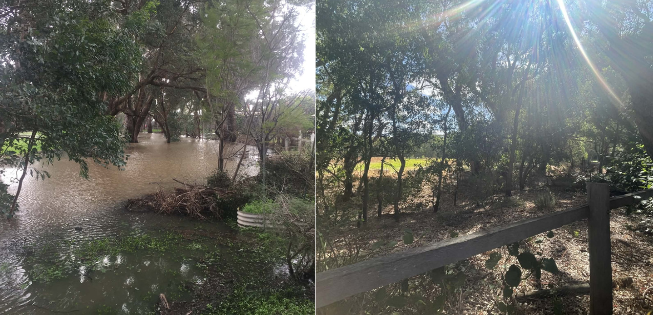
Ecologists work to take care of the forgotten river
Botanist Jay Jay Werny, who works with the Helena River Catchment Group, says the river is often referred to as Perth’s forgotten waterway.
“Some people call it Perth’s forgotten river because no one knows where it is or exists,” he says. “It’s still an incredible wildlife corridor, but it’s under incredible stress.”
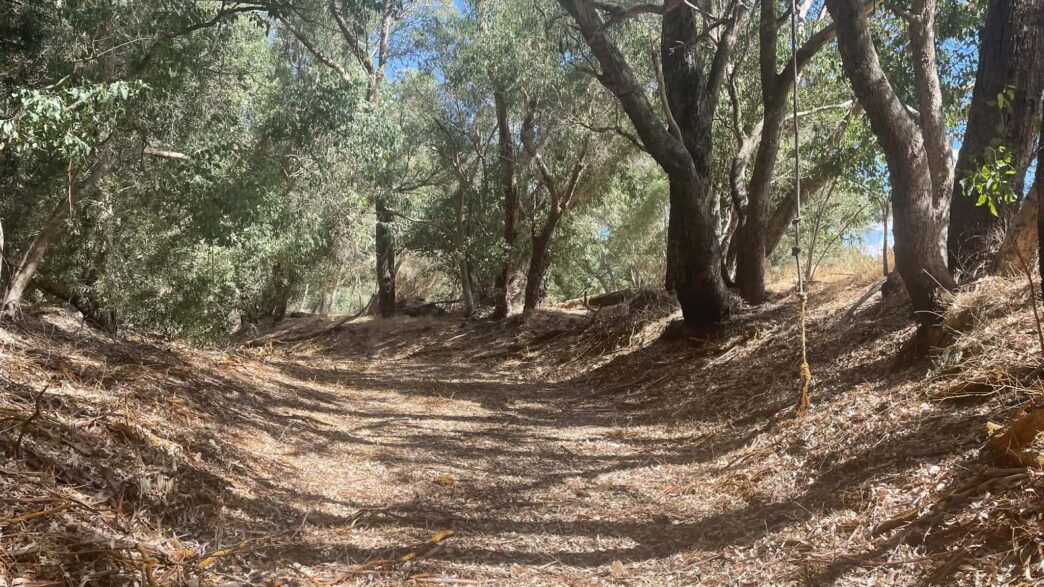
Werny explains that the Helena River now only flows seasonally, with water moving through the system in winter before drying into scattered pools during summer.
He says volunteers and environmental groups play a crucial role in protecting the river’s health.
“The volunteers put in unbelievable amounts of work to try and keep it as healthy as they can,” he says. “We want more funding, more science and more water going down the river.”
Werny believes increasing public awareness is key to ensuring the river’s long-term survival.
“No one knows this river exists,” he says. “I lived in this suburb for four years before I really knew where the Helena was.”
Local organisations fight to protect the river
The Bibbul Ngarma Aboriginal Association, an Aboriginal-led organisation, is working to restore the health of the river through the BoorYul-Bah-Bilya (BBB) program in partnership with Traditional Owners and the wider community.
Bibbul Ngarma Aboriginal Association Executive Director Francesca Flynn says the initiative focuses on caring for both the river and the surrounding community.
“In a nutshell, BoorYul-Bah-Bilya is our program for healthy country and healthy communities, and we do it all on a river catchment approach,” she says.
Flynn says managing the entire catchment is essential to protecting waterways.
“There’s no good looking after the river if somewhere else in the catchment something is damaging it. We have to look holistically at the whole catchment.”
She says many rivers across Western Australia are in poor condition and require new approaches to management.
“All rivers in this state are in bad condition,” Flynn says. “If you keep doing the same thing, you’re going to keep getting the same results, so we need a new approach to river management.”
Flynn describes the Mandoon Bilya as an important green corridor through heavily developed areas.
“That green ribbon running through urban and industrial areas is a beautiful corridor that needs to be protected and restored,” she says.
A new data centre raises eyebrows
Concerns about the river’s future have intensified following a proposed data centre development near the Helena River in the Hazelmere area.
City of Swan Councillor Sarah Howlett says she supports community concerns about the proposed location, although only the mayor is authorised to speak on behalf of the city.
“I support the community’s concern about the proposed location for the data centre being on the banks of the Helena River (Mandoon Bilya) and immediately next to the Helena Waldorf School,” she says.
Howlett says the decision on the proposal will ultimately be made by the Joint Development Assessment Panel (JDAP), with the City providing a Responsible Authority Report based on publicly available planning documents.
“The structure plan aims to facilitate sustainable growth that increases employment opportunities in the local area while protecting sensitive wetlands, ground and surface water and surrounding residents,” she says.
She says significant community concern has been raised about the proposal.
“I believe the city has received an overwhelming number of public submissions; an unconfirmed number of 1,700 was given to me,” she says.
Flynn says large-scale developments must be carefully planned to avoid environmental damage.
“These developments are really resource-heavy,” she says. “They use millions of litres of water and a lot of power, and they should be nowhere near waterways.”
She says developments like data centres need careful regulation and planning to reduce environmental impact on surrounding ecosystems.
Community members and environmental groups have raised concerns about how industrial expansion could affect water quality, wildlife habitat and the long-term health of the river.
Despite the challenges, Flynn says the Mandoon Bilya remains resilient and culturally significant.
“People think it’s not a real river because it doesn’t flow all year round, but Australian rivers don’t work like northern hemisphere rivers – it’s still a river, and it’s still important,” she says.
She believes community involvement and cultural care will be essential in protecting the river for future generations.
“She’s special, and she’s beautiful, and her spirit is still strong.”
Nicola Kinnane

Nicola Kinnane is a Perth-based actor studying at ECU. Alongside her creative practice, she writes on mental health and contemporary social issues, approaching journalism as an extension of her interest in character, empathy and lived experience.