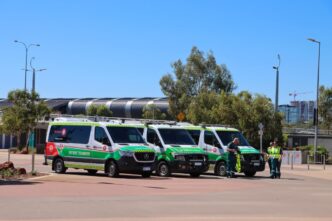
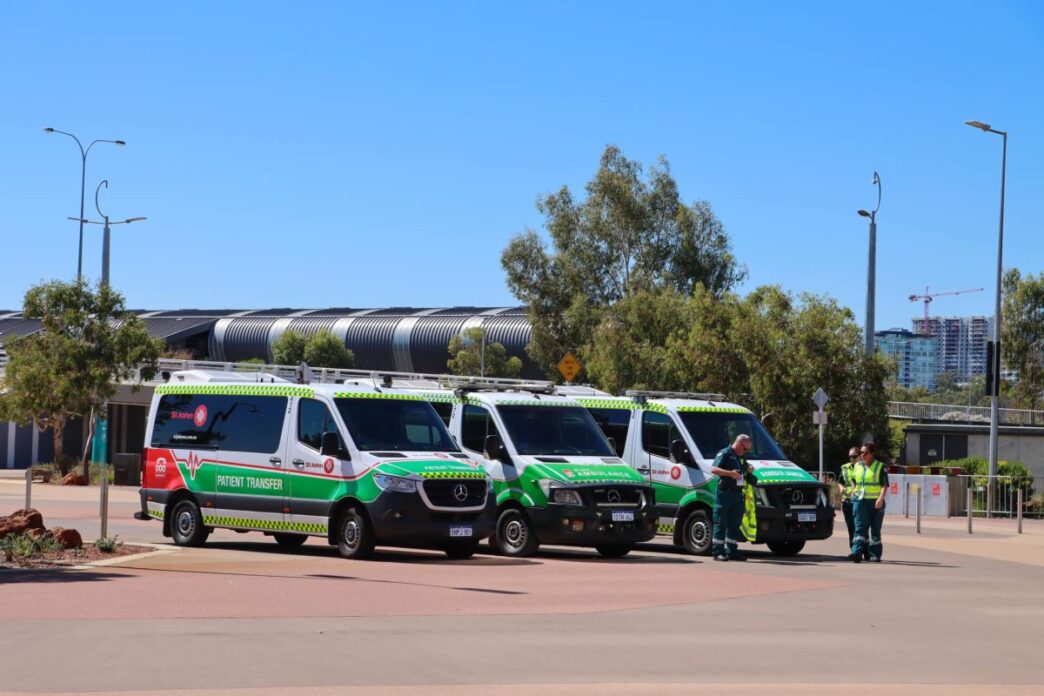
With more than 105 assaults recorded at the start of March, Perth’s first responders have been calling for a change.
At a press conference in March, St John of God chief emergency operator Wil White called upon the public be respectful of the first responders, but is it enough?
“We are in your houses, we are around supporting the community every day, trying to provide emergency ambulance care to those in need, and what we’re seeing today is an increase in assaults and aggression towards our frontline crews,” he said.
On top of the assaults, St John of God has still not yet addressed their low wages and increased ramping rates from 2025, where WA reached a record-breaking 5,460 hours in March, causing protests and vehicle vandalization from paramedics across WA.
With these factors at play, will there be enough future paramedics willing to endure the career?
Future paramedics are still stepping up
22-year-old nursing student Lucy Anderson has wanted to be a paramedic since high school, factoring in the career’s challenges.
Currently in her 2nd year of nursing, Anderson explains it is another step away from hospital work.
“Compared to hospital jobs where everything’s controlled, paramedicine throws you into all kinds of unpredictable situations.
“I like that challenge.
“I think there will be something quite rewarding about stepping into a chaotic scene, helping stabilise things, and being part of that first step toward someone getting better.”
Leaving the wards behind, Anderson says she expects the chaotic atmosphere, claiming it may be a lot quieter than advertised.
“I’ve heard that a lot of the job actually isn’t big emergencies and a lot of it is helping people with everyday issues, doing a bit of social support, and looking after elderly or vulnerable people who don’t have many other options.
“The hours can be tough too, with long shifts and rotating schedules that can mess with your personal routine.
“You also see people on some of their worst days, and things don’t always turn out well.”
Confident with her future in the field, Anderson says the pressure comes from trusting your instincts.
“I think one of the biggest worries is making the right call under pressure.
“You might be in the back of a moving ambulance or out in public without much backup, so you have to rely on your own judgement.
“The idea of making a mistake, especially with something like medications or airway management, is pretty daunting.
“But I think that fear also pushes you to train properly and stick closely to protocols so you can do the best job possible.”
In response to the recent assaults, Anderson says it is too complicated for a simple solution, and the call for paramedics will always be needed.
“It’s definitely concerning.
“A lot of it seems to be linked to things like substance use, mental health issues, or just general frustration.
“It’s a complex problem, not just one simple cause.”
With the paramedicine career still being in high demand, what can future paramedics expect in response to the recent claims?
“Exciting” future despite system strain
Head of the postgraduate Paramedicine course at ECU, David believes the future of Paramedicine is actually becoming “exciting”, with the future promising a change of systems and job opportunities.
“As far as a career goes, it’s quite an exciting time to be a paramedic because there are lots of opportunities”
“Ramping, obviously, the figures are massive, and that can be hard for emergency services because you can be tied up for hours at the hospitals’
“What that means as a wider health system is that we have to – and ambulances are a part of this – look at doing things differently”
“If we look at what happens in different jurisdictions, it means not necessarily bringing everybody to the hospital, and that might be managing more patients in their community, even their home.”
With many others like Lucy, the future involves a strong influx of new paramedics, with new policies hopefully implemented to aid the career.
Clare Perrott

Clare Perrott is a Journalism and Broadcasting student at ECU with a strong passion for arts, culture and education.