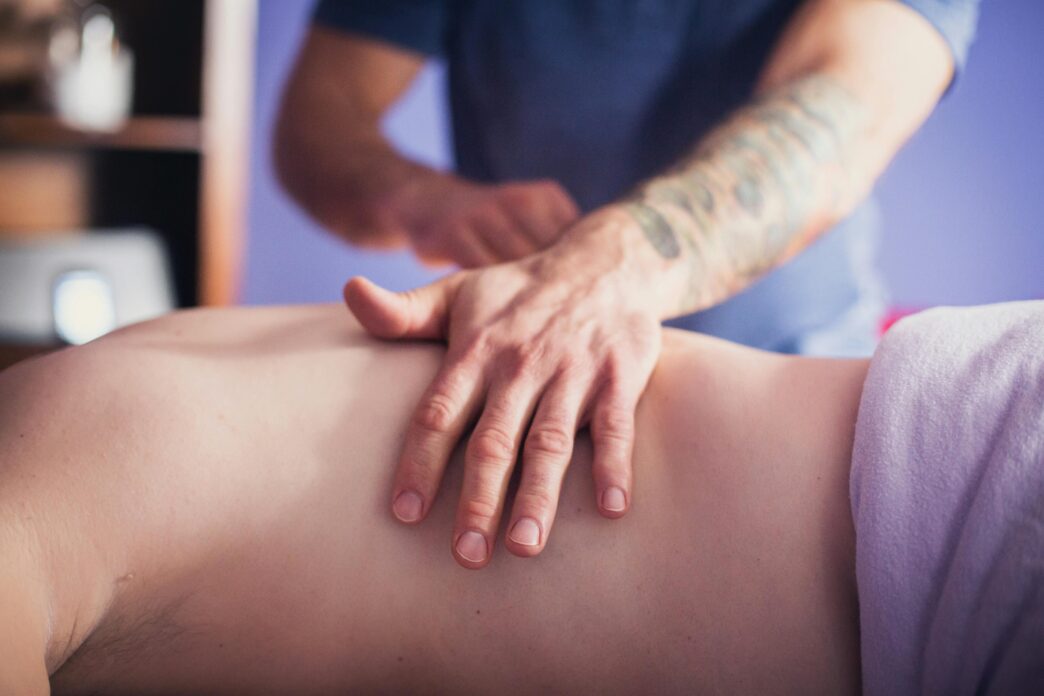
“Happy endings” and erotic massages are often associated with back alleys and dingy houses marked by red and blue led lights flashing “open”.
But there is a growing publicised service for women, offering erotic massage options ranging from “bondassage”, sex toys, and women seeking oral sex.
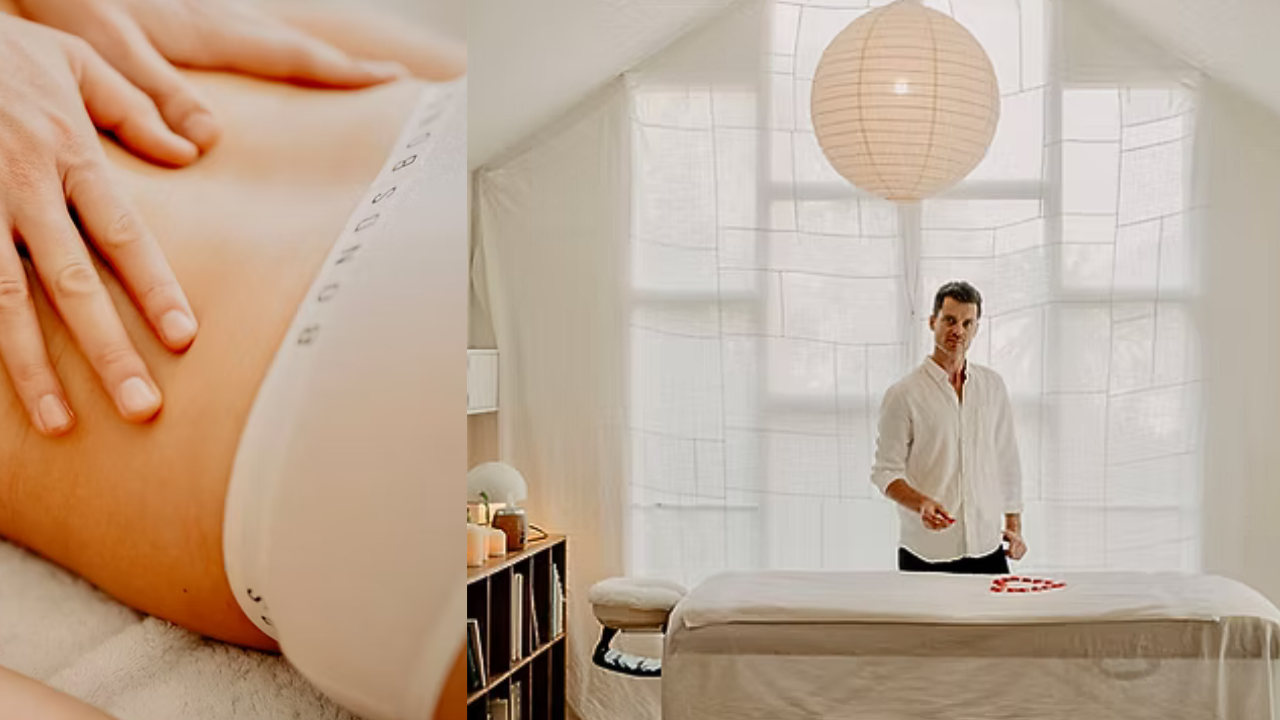
For Perth-based sensual and erotic bodywork masseur Chayse Amour, his work, he says, is legitimate and guided by professionals.
“I work with sexologists when I am working with a client and I’m getting the right info from the sexologist on how to proceed.”
His works include therapeutic massages ranging from improving conditions like anorgasmia, the inability to orgasm and vaginismus where the muscle surrounding the pelvic region tense during penetration.
Mr Amour said his use of the word “massage” has drawn criticism, with some questioning whether his services reflect the nature of the therapeutic industry.
“There are always people that will hate it and there are always those who will love it,” he said.
“They have this fear that, by me saying it’s massage, people are going to assume their massage has erotic elements to it.”
The stigma of “massage” and the problem of self-regulation
Therapist and clinic manager, Shona Green, says the social representation of massages and the proliferation of non-qualified therapists have compromised the profession.
“I believe that massage therapy is devalued and mistrusted by a large portion of the general population due to the presence of the sexual massage industry and the absence of industry regulation.”
Ms Green with over 30 years experience addresses concerns over the misuse of the term, “massage” which she believes categorically undermines legitimate clinics.
“To this date, the legitimate, therapeutic massage industry has been forced to self-regulate and attempt to separate itself from non-qualified therapists,” she said.
Mr Amour says while he didn’t study sexology but works alongside professionals to keep informed.
“I never say I am a sexologist, but I do work with sexologists.”
Mr Amour doesn’t shy away from his services being the erotic kind, but stands firm in his opinion on his role in the industry.
“You kinda gotta [sic] understand the blurred lines around what services look like an erotic service and those services which don’t provide that–it’s not my job to police, it’s my job to promote my service,” he said.
These grey areas are what Ms. Green contends that the distinction between clinical based therapeutic practices and sex stimulant practices each stand for.
”I believe that no person should be allowed to use the word ‘massage’ in promoting services unless they have membership with an accredited professional massage association.”
The Association of Massage Therapists Code of Ethics defines the risk that massage therapists have while promoting services on social media.
It lists ”poor-quality information” distributed online can have damaging impacts for the massage therapists and clients, and how health practitioners are obligated to provide safe and ethical care.
Mr Amour states “it’s the price of admission” working in the industry, he added, “To offer massage as a professional masseur with no erotic massage, someone is going to come in and say, Oh, [sic] can I get a happy ending with that?”
“That’s going to happen at some point, If that was to ever emotionally damage you, you probably should never be a masseur,” he said.
Sex work, WA legislation and happy endings
Under the Prostitution Act 2000, sex work is defined as the stimulation of a person in an exchange of payment.
President of SWEAR (Sex Work, Education, Advocacy & Rights), Emma Softly, says WA laws surrounding sex work legislation are complex.
“Erotic massage is not a crime in WA, there’s a lot of grey areas that can make the laws hard to understand and navigate.”
Ms Softly’s experience offers a broader tension within the laws, the overlapping of rules makes uncertainty around what is legal and is not very confusing.
“It is not a crime in WA for a sex worker to work from their own home.
“Doing sex work for an escort agency is legal, but operators of escort agencies may be liable for ‘living off the earnings’ or ‘procuring’ offences under the laws,” she said.
“It is legal to do sex work in a brothel, but it is illegal to own or operate a brothel.”
Criminal and Civil Lawyer Louis Durand said the distinction becomes blurred when the massage crosses the line between therapeutic and sexual gratification.
Mr Durand said massage parlours are widespread, across urban areas, with visible ‘massage’ signage.
This lack of clarity leaves workers managing client expectations challenging, blurring boundaries between therapeutic services and sensual massage.
With nearly 20 years as a massage therapist, for Charuwan Ong-lem, being asked to provide happy endings was a common occurrence.
She says requests range from “What services do you offer?” to “Do you charge extra?” and the more direct in nature, colloquial “Do you do happy ending?”
Ms Ong-lem elaborated on the concerning behaviour at the clinic over the years from clients.
Some of them who walk in the door are visibly married, with wedding band marks visible on their fingers, or on rare occasions, couples arrive together for a massage session but request separate rooms.
Ms Ong-lem had to learn how to be more assertive in her approach with customers.
“When I was new and less experienced, I received many inappropriate inquiries.”
Many callers were seeking services that were prohibited in the massage clinics where she worked.
“Sometimes eight out of ten calls per day were asking for ‘extra services,’” she said.
The massage therapy industry is riddled with unwanted advancements, where individuals coming in for massages are consistently seeking “special services” from masseuses at therapeutic clinics.
“It took around six to 12 months of consistently setting boundaries before those calls reduced significantly.”
During a session, if staff feel unsafe, massage therapists are advised to speak loudly to alert colleagues and to stay vigilant by screening phone calls.
Subtly exposing themselves in sessions and testing staff’s boundaries with request of sexual acts is why Ms Green ensures clear instructions are made at the time of the booking and to her staff.
“A waiver signed prior to first treatment in which the client agrees not to behave inappropriately.”
Massage clinics have safety procedures to protect the staff who work in their centers.
Signs are displayed on the back of the toilet doors outlining the code of conduct and advising inappropriate behaviour in the clinic is not tolerated.
“Presenting ourselves as professional and ‘clinical’ in the clinic and in marketing,” she said.
Making women feel safe
Mr Amour says he aims to create a space where women feel safe and their boundaries prioritised.
“Women deserve to feel beautiful and desired and to have experiences that are all about them.”
Mr Amour’s service acts as a two-point approach, the therapeutic point and the erotic massage aspect, where erotic fantasy is explored and a lot of that is promoted on his social media.
“Theres people online hating the fact I call it massage, but then I have had masseurs and masseuses who have said in the comments that what I do is amazing and beneficial.”
Although his services raise questions on the legitimacy of his practice, he says his work extends to support women in different aspects of their lives.
“Clients started contacting me for different kinds of therapeutic work or sexual surrogacy, intimacy coaching, touch therapy, and I found that all incredibly intriguing,” he said.
For an industry already grappling with stigma and self-regulation, the rise of erotic services continues to test how “massage” is defined, and who gets to define it.
Ra Castel

I am a journalist student at ECU, YouTuber and Content producer with over 249K views on TikTok, 25K+ views on Instagram reels and posts and 4k views on YouTube. My intent for my works to progress into more video journalism that will cover all sorts of topics from entertainment and breaking news. Other journalist mediums I am interested in diving into are podcasting, radio and content creation. You can find me on all social media platforms and Linkedin for more content.