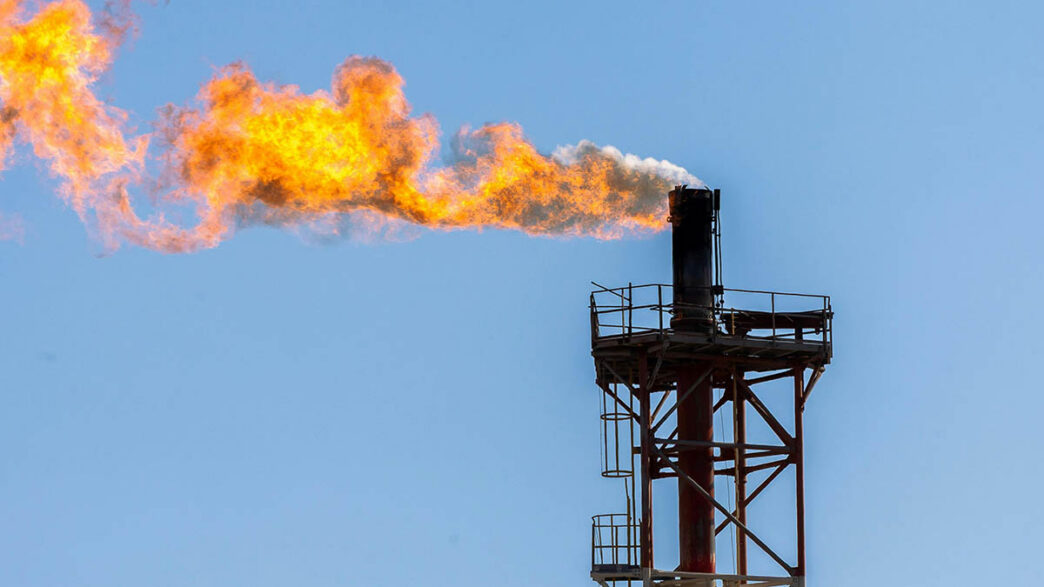
The Australian Energy Market Operator (AEMO) forecasts supply gaps despite WA theoretically being capable of producing enough electricity to power the world.
Experts at Emissions Reduction Initiative at Department of Water and Environmental (DWER) report only 6.5 per cent of WA land is needed to produce 29,000TWh of electricity through solar and wind generation.
WA operates as an “island state” – meaning it is independent of the national grid – and it holds about 90 per cent of Australia’s gas reserves.
AEMO reports WA is producing more than half of its energy through renewables, ith peaks where renewables have supplied up to 91.1 per cent of electricity on the system.
Widening supply gaps
AEMO also forecasts shortages in domestic gas supply starting around 2030.
Meanwhile, WA is accelerating its energy transition as it works towards net zero.
Local gas will continue to support the south west electrical grid system to stabilise energy systems during peak demand periods.
“As the energy system continues to evolve, gas is expected to play an important role in supporting electricity reliability and system security, particularly during periods when high demand coincides with lower renewable generation, ” AEMO said.
Annual supply gaps are forecast to grow from 11 terajoules per day (TJ/day) in 2030 to 82 TJ/day in 2035, and to 478 TJ/day in 2045.
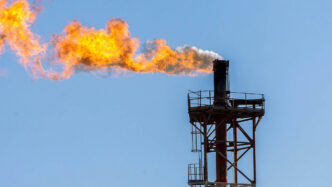
Gas-fired power generation will therefore become increasingly important for reliability of electricity generation as renewable energy systems are expanding.
Forecast shortfalls are looming
Why are gas shortages forecast around the year 2030?
According to AEMO, shortfalls are primarily driven by supply-side factors, “particularly the depletion of mature gas fields outpacing the development of new domestic supply.”
The projected gap is largely the result of declining production from existing gas fields.
In response to this outlook, experts at the ABC’s Spotlight on National Resilience panel addressed Australia’s dependence on foreign manufacturing, defence and resource supplies.
Climate Literate Trainer, Nickey Ludkins, said the destabilised market is “politically driven” and influenced by the oil and gas sector.
“This is a rhetoric that changes from time to time, as regularly as every year if not more often,” she said.
Shadow Minister for Industry and Sovereign Capability, Andrew Hastie raised concerns over the government’s approach to supply and energy, calling for Australia to “wake up” and focus on “nation building”.
“How do we recover from this?” he said.
His comments reflect broader concerns about Australia’s position amid ongoing global conflict, which has exposed vulnerabilities in the nation’s resource strategy.
Mr Hastie said current political instability is exposing “ruptures” reminiscent of those seen during the Iraq War.
Associate Professor of Supply Chain Management and Logistics at Curtin University, Dr Liz Jackson, said we should shift from recovery to learning from the disruption.
“What have we learnt as a result of the disruptions?” she said.
Net zero, with limits
Despite the growth in renewables, WA energy transition is expected to rely heavily on gas to remain reliable in low wind and sunlight outputs.
AEMO has suggested additional solutions are needed in combination with flexible operational measures, policies or investments.
“These risks could be mitigated if additional gas is brought online, either through expansions of existing projects or the development of new resources such as Ocean Hill, Equus, Browse or Corvus.”
Austin Engineering Chief Operating Officer, Vincent D’Rozari, said the reliability of renewables remains dependent on conditions.
“When wind drops, or the sun doesn’t shine, and those things can’t keep the batteries charged, you’ll then need gas turbine driven engines to run generators,” he said.
Ra Castel

I am a journalist student at ECU, YouTuber and Content producer with over 249K views on TikTok, 25K+ views on Instagram reels and posts and 4k views on YouTube. My intent for my works to progress into more video journalism that will cover all sorts of topics from entertainment and breaking news. Other journalist mediums I am interested in diving into are podcasting, radio and content creation. You can find me on all social media platforms and Linkedin for more content.