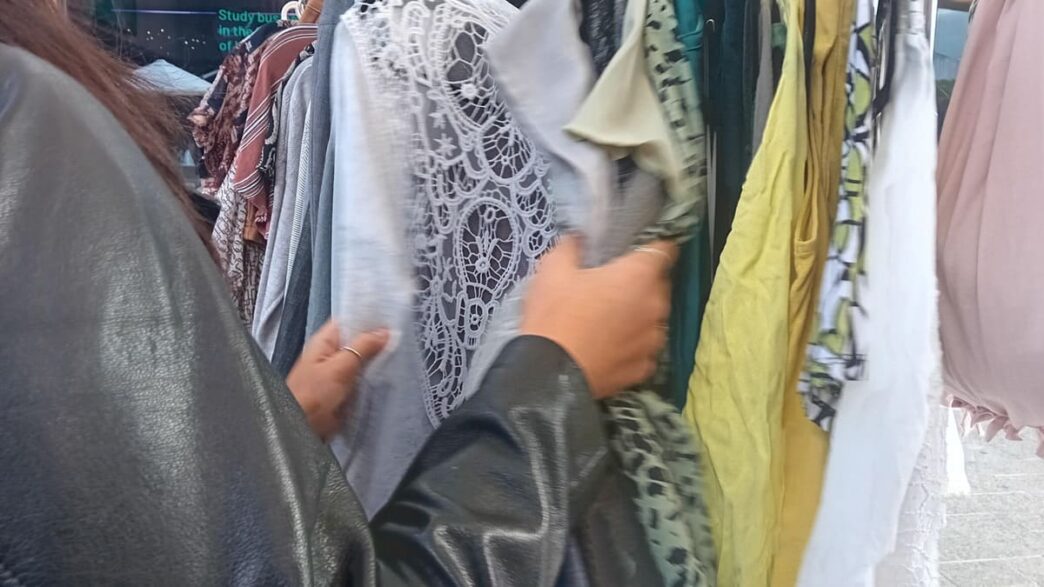
Australia is now the world’s biggest textile consumer, with 43,400 tonnes of clothing donations ending up in landfill each year.
While donating clothing is viewed as an environmentally friendly alternative to throwing out items, those working inside op shops reveal that the reality on the floor is very different.
Local Perth op shop manager, Jayne Morrissey, says she has seen the volume of fast fashion increase.
“I’d say now about 80 per cent of donations is just Shein and Kmart.
“It’s just astronomical compared to how it used to be,” she says.
Overnight trends flooding donation bins
Morrissey says that social media trends are one of the biggest contributors to fast fashion donations, with once popular items arriving just weeks after being loved online.
“Trends that were popular, like two weeks ago, we would see come in.
“People are buying these clothes and then wearing them for a week and just donating them.”
This shift in clothing consumption suggests that garments are treated more as temporary than long-wear items.
As a result, this adds to the workload, with Morrissey and her staff having to sort and categorise each item based on whether it is sellable, can be made into rags, or has to be shipped internationally.
She says, based on the condition of some of the clothing she receives, people do not consider the state of the items they donate.
“I don’t think that they think about the people, mainly volunteers, on the other side of the donation bin.”
‘Too much stuff’
These challenges faced by op shop managers, just like Morrissey, are part of a larger, more national issue unfolding.
Ben Kaminsky, co-founder of the Textile Recyclers Group, says the textile donation industry has changed over time.
“I would say 99 per cent of people have been [donating clothing] with good intent, because historically, when it wasn’t the world of fast fashion, the garments were actually getting repurposed.
“But because of fast fashion, there’s too much stuff, so the charities are inundated with material.”
As a result, the current volume of donations to op shops is making it difficult to keep the reuse system afloat.
“The charities are probably the biggest land fillers of clothing in the country, at a great cost to them as well.”
But it goes deeper than the donations.
Declining quality
The quality of materials has declined, becoming more mixed synthetics and designed to last for a short period of time.
According to Kaminsky, many labels are inaccurate or do not reflect all of the materials.
“You cannot even trust the label. It might say 100 per cent cotton, but it’s actually got a cotton-spandex.”
He says this lack of transparency makes it more difficult to determine whether an item can be recycled or reused or if it needs to be discarded.
Yet, processes used to determine the recycling of these items cost more than the wastage options.
“Landfill is cheap, landfill is legal, and that’s where most of the stuff will end up.”
He explains that this is more than just an issue in Australia, with the struggle reflecting globally.
“We’re miles away. It’s not just Australia, the whole planet’s miles away.”
Charlotte Goodwin

Hi! My name is Charlotte and I am a third year Global Comms and Media student from the University of Portsmouth in the UK! I am on a year exchange here at ECU as part of my dual degree, and major in journalism.