Just imagine getting a call at midnight that your little girl is sick and has lost the ability to walk.
This was the beginning of Betsy’s nightmare after her five-year-old daughter Sarah went to her aunt’s house for a sleepover.
After the alarm was raised, Betsy says it was a terrifying night for her and her family.
She rushed Sarah to Princess Margaret Hospital, now Perth Children’s Hospital.
After several blood tests, the five-year-old was diagnosed with a rare blood disorder known as sickle cell.
“Telling me that in the hospital just breaks my heart,” says Betsy.
Another parent had a similar experience.
“When we got the call from the hospital that my son’s haemoglobin was low, my heart dropped,” says Nadjuma Hatungimana.
The mother of two from Queensland explains finding out her then-two-year-old named Luqman also has the condition, created huge anxiety.
“I do carry a lot of guilt,” she says.
“I wish and pray that no parent or family will ever have to go through that because it’s not a nice place to be.”
What are sickle cells?
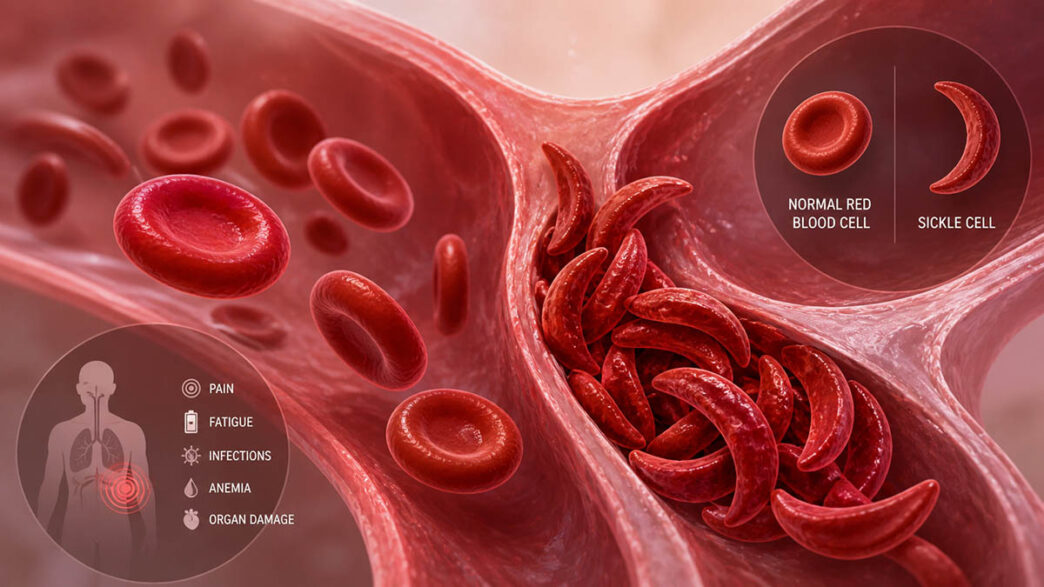
According to the Centre for Genetics Education, sickle cell disease is a group of common inherited conditions.The human body is composed of red blood cells, which contain proteins called haemoglobin.
Haemoglobin is the part of the blood cell responsible for carrying oxygen around the body.
In sickle cell disease, the premature breakdown of red blood cells contributes to a reduced cell count, leading to the sickle or crescent shape of the remaining blood cells in the body.
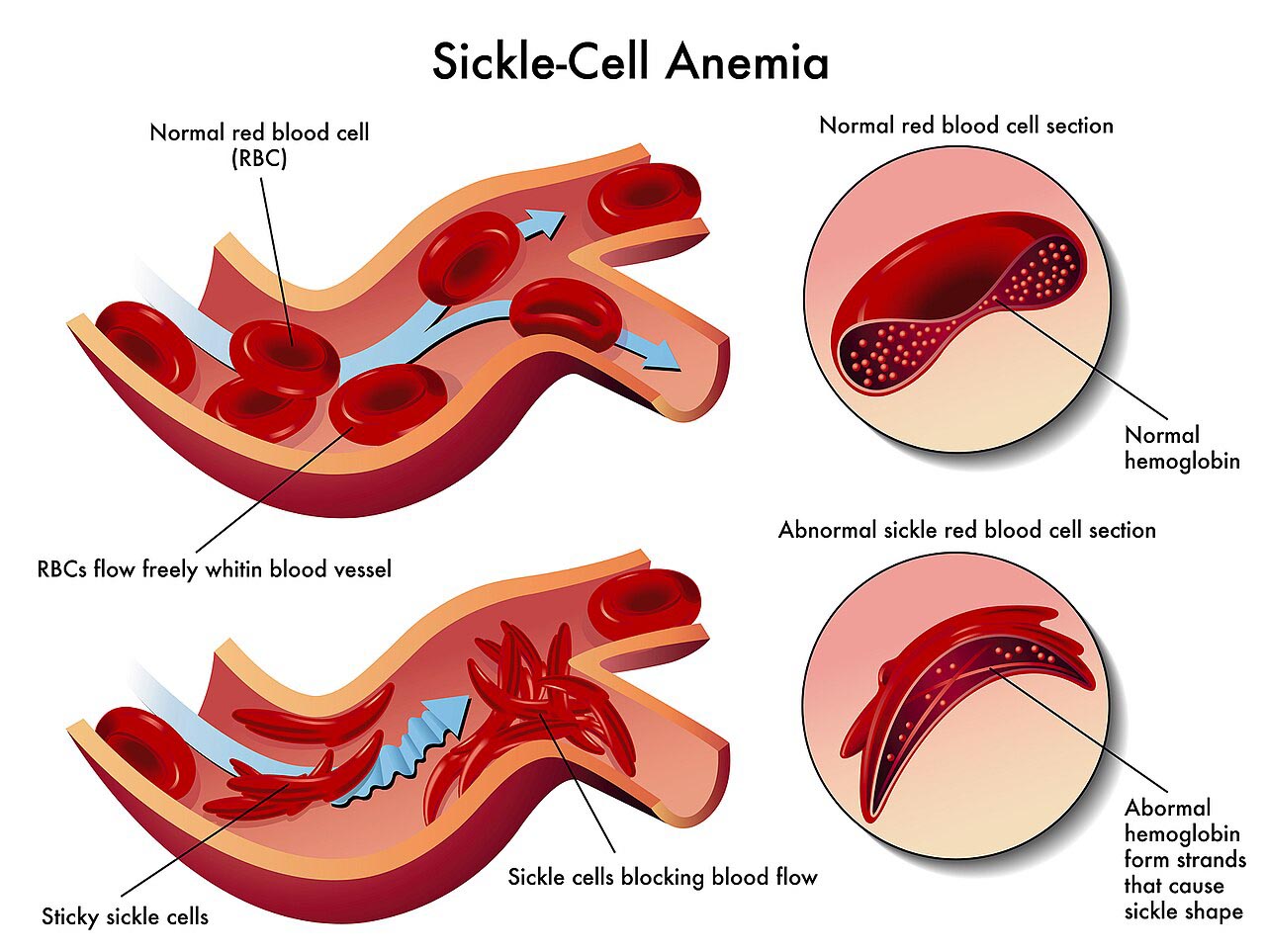
This can lead to chronic pain, tiredness, and delayed growth in children.
The pain episodes caused by this condition may result in bone and chest pain and repeated bacterial infections, which can also lead to organ damage.
Some people living with this disease are more likely to have pulmonary hypertension, which can lead to heart failure if not detected early.
This form of disease is more common in individuals with ancestry from Africa, the Middle East, the Mediterranean, Central Asia, and South America.
Betsy, who is of African descent from Sierra Leone, knew that she had the trait because of her genes as a carrier.
“I knew about sickle cell because I had the trait, but mine wasn’t intense,” she says.
“Especially coming from Africa and seeing the casualty rate of people with sickle cell and how they live, all of that in my head was really hard to take in,” said Betsy.
For Nadjuma Hatungimana, despite knowing she and her partner are both carriers of the sickle cell gene, they felt lucky to have their first daughter without the condition.
When their little boy came as a surprise to them, they were both hopeful that he would turn out like his sister- without the disease. It wasn’t to be.
Living with this condition and facing isolation
In Australia this form of disease is not common. Some people of African descent, say they find it difficult to open up about their struggles when dealing with sickle cell disease.
For Betsy, it’s tough when her daughter is in hospital, especially with her family so far away.
“It feels a bit lonely here and isolated, back in Africa, everyone comes together to help each other,” she says.
Betsy’s daughter, Sarah is now 14 years old. She didn’t talk much about the illness when she was younger, worried she’d be labelled.
“My whole life, I have been scared to share with people about my condition, because they will think of me as the sick person”.
“I have tried to keep it to my closest friends”.
That changed when Sarah was in a wheelchair for four months because of a health complication with her condition.
She was faced with the reality of going to school in a wheelchair and not being able to do activities like other kids in her class.
Sarah had no option but to explain to her classmate the reason she was in a wheelchair and details of her condition.
“I have to explain to them that I could still do stuff and go out, but I just need to be careful with myself, you don’t have to worry”.
“Now I feel confident sharing my story and getting the word out there,” says Sarah.
Triggers to sickle cell crisis
The most common way a person can get sickle cell anaemia is through genetics, according to Dr Shree Malani, a Clinical Consultant at the Hematology clinic in Perth Children’s Hospital.
Dr Malani says some triggers of sickle cell crisis are also related to different weather conditions, even dehydration.
“If a child has sickle cell, most of the time, it will be that both of these parents are carriers, which refers to sickle cell trait”.
She explains that both parents can carry on as normal while having the traits, but there is a one in four chance that a child from both parents will have the disease.
That was the case with Betsy’s daughter, Sarah and Nadjuma’s sone Luqman.
These parents are carriers of the trait and could carry on as normal, but that was not the case with their children.
“My sibling doesn’t have sickle cell, but I always question ‘why me’ and ‘why is this happening to me?” says Sarah.
Nadjuma Hatungimana knows there is a high chance her son will spend a lot of his future in hospital.
“His life is going to look different compared to his sister,” she says.
Emotional pain and trauma and the fight to keep living
Fortunately, Luqman has not started showing any symptoms yet. She knows she is lucky to have good family support for if – or when- the disease presents.
Currently, Nadjuma is focusing on spending more time with her child and raising awareness about the disease within the African community in Queensland.
“I will speak up and talk about it, and I don’t care if you have opinions about me,” Nadjuma says.
Betsy hopes that the African community will do better in terms of care and treating everyone with dignity.
This is because the stigma within the community not just affects the child, but also the parents.
“It doesn’t matter if a child is sick or has sickle cell, we are all one,” said Betsy.