



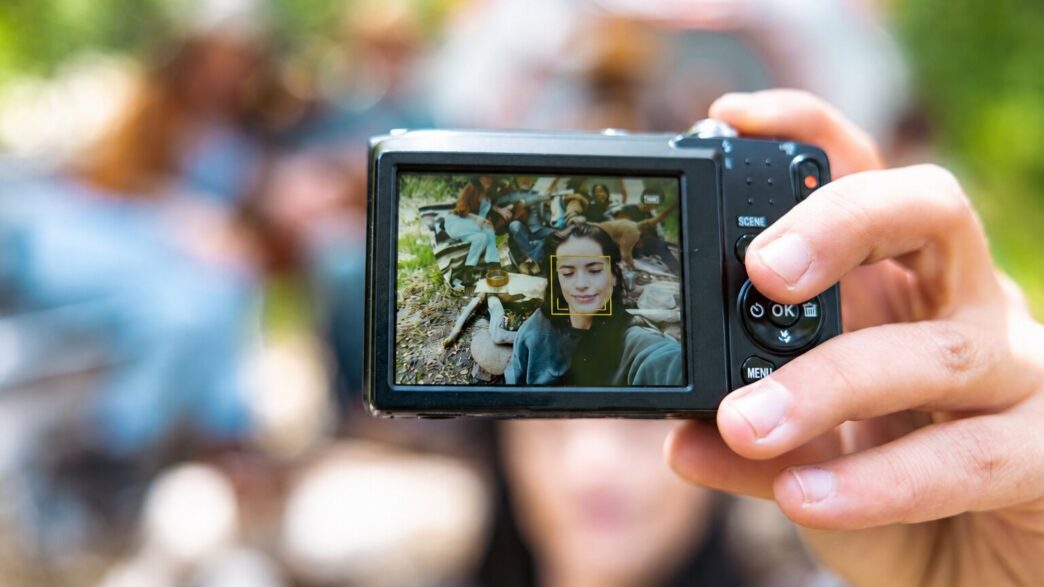
For years, compact digital cameras seemed destined to remain forgotten in bedroom drawers, replaced by the increasingly sophisticated cameras built into smartphones.
But now, their harsh flash, grainy images and unpredictable results are part of the appeal.
Once considered outdated, these cameras are finding their way back into handbags and nights out, particularly among young people.
For 21-year-old university student Vio Landa, bringing her digital camera when she goes out with friends has become almost as important as bringing her phone.
“I just love the way the photos come out,” she said.
“They don’t look as perfect as photos from my phone, but I think that’s what makes them nicer.”
She bought her first digital camera after repeatedly seeing photographs taken with them on TikTok and Instagram.
At first, she was drawn to the aesthetic. But after using one herself, she said taking photos on a separate camera began to feel different from taking them on her phone.
“With my phone, I take a photo and immediately look at it, and if I don’t like it, I’ll take another 20,” she said.
“With the digital camera, I don’t really think about it that much. We take the photo and then continue with our night. Sometimes I don’t even look at them until I get home.”
That unpredictability has become part of the appeal.
A slightly overexposed face, red eyes or an unexpectedly harsh flash might once have been reasons to delete a photograph. Now, those imperfections can be exactly what users are looking for.
From outdated to in demand
The renewed interest is not only visible on social media.
JB Hi-Fi employee John Edward said the store had noticed more customers, particularly young people, coming in specifically looking for compact digital cameras.
“We get people coming in asking for them all the time now,” he said.
“A lot of them already know which models they want because they’ve seen them on TikTok or seen someone else using one.”
The demand is reflected beyond individual stores.
Figures from the Camera & Imaging Products Association show worldwide shipments of digital cameras increased from about 8.49 million units in 2024 to 9.44 million in 2025, an increase of 11.2 per cent.
The growth was even stronger for cameras with built-in lenses — a category that includes compact cameras. Shipments jumped from about 1.88 million to 2.44 million units in a year, an increase of 29.6 per cent.
While the figures do not identify buyers by age or distinguish between vintage-style compact cameras and other fixed-lens models, they suggest growing demand for dedicated cameras.
For Edward, the change has been noticeable on the shop floor.
“A few years ago, people were moving away from compact cameras because everyone had their phone,” they said.
“Now we’re seeing young customers coming in specifically wanting that older digital-camera look.”
Some models have even become difficult to find as demand has increased.
The beauty of imperfection
But why would a generation raised with access to some of the most technologically advanced phone cameras deliberately choose something older?
For Andrew Trigg, a film director, the answer may have less to do with technical quality and more to do with how an image makes us feel.
“Photography isn’t necessarily about producing the cleanest or sharpest image,” he said.
“Sometimes the imperfections are what give an image its personality.”
Older digital cameras produce a distinctive visual language: direct flash, blown-out highlights, unusual colours and a quality that immediately separates the image from the polished photographs produced by modern smartphones.
“Modern phones are incredibly good at correcting an image for us,” he said.
“They adjust the exposure, sharpen the image and process the colours before we’ve really had to make many decisions ourselves.”
Digital cameras can interrupt that perfection.
Rather than creating the perfect picture, Trigg said the limitations can create an image that feels natural.
There is also nostalgia involved, even for a generation that may have been too young to remember the peak of compact cameras.
The aesthetic recalls family albums, early Facebook photographs, celebrity party pictures and the visual culture of the 2000s.
“It’s interesting because young people can feel nostalgic for an aesthetic they didn’t necessarily experience themselves,” Trigg said.
“They’re not really trying to recreate the technology. They’re recreating a feeling associated with it.”
For Vio, the appeal of her digital camera isn’t about taking better photographs. It’s about capturing moments without worrying whether every shot is perfect.
And perhaps that’s what makes these cameras appealing again. In an age when almost every photograph can be edited, filtered and perfected, there’s something refreshing about simply capturing a moment as it happens.
As Vio put it: “It feels more like a memory rather than something you’re taking just to post.”
Genyvra Caecillia

Genyvra Caecillia is a Journalism and Broadcast Media student at Edith Cowan University. Passionate about news, politics, and storytelling, she enjoys producing meaningful stories that inform, engage, and connect communities.


