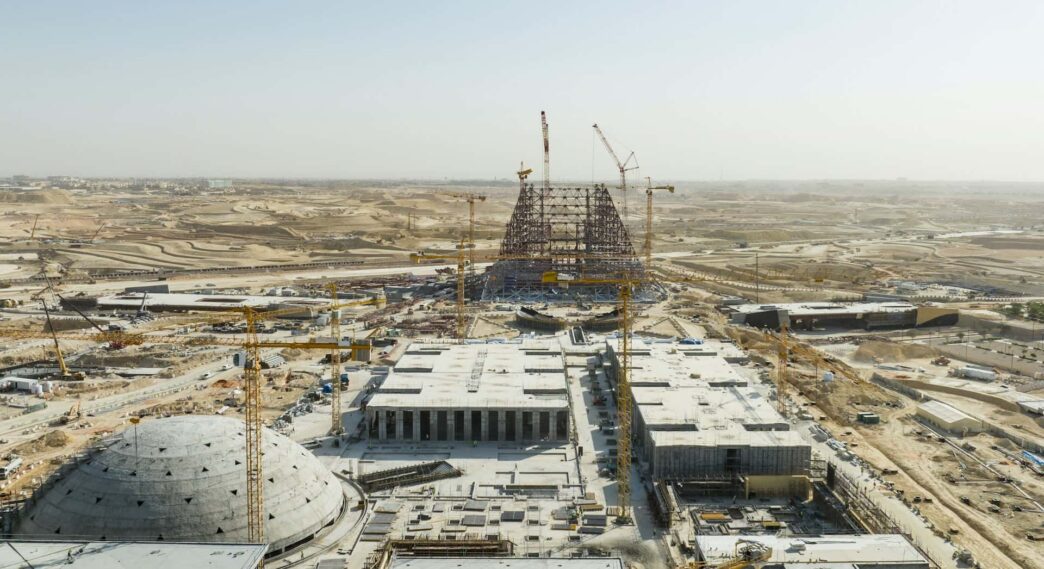
In December 2024, under-fire FIFA president Gianni Infantino announced at a FIFA congress meeting that the 2034 World Cup would be returning to the Middle East for the second time in twelve years, with Saudi Arabia being awarded their maiden hosting duties for football’s premier competition.
There is no doubt that there is a large appetite for football in the Middle East and indeed in Saudi Arabia – the sport is the most popular leisure time activity after walking in the region after all.
However, perhaps what’s most curious about Saudi Arabia’s successful bid to host the FIFA World Cup in 2034 is the fact that they were able to run effectively unopposed, in a bidding window where FIFA had stacked numerous factors in their favour.
Usually, FIFA announces bidding windows years before a nation’s final application is due, giving football associations around the world ample time to converse with governments and important figures to endorse their bids.
However, FIFA announced the opening bids for the 2034 FIFA World Cup on October 4, 2023, with expressions of interest due October 31.
Saudi Arabia managed to submit their EOI within minutes.
Furthermore, FIFA rules state confederations must wait a minimum of two World Cups – eight years – between hosting the tournament, to share it around the globe.
When FIFA accepted the joint bid of Portugal, Spain and Morocco for 2030 edition (ruling out Europe and Africa) and placed the opening three games of the tournament in Paraguay, Uruguay and Argentina to celebrate 100 years of the tournament, they ruled out South America too.
The recent North American edition meant that the only possible options left were Asia and Oceania, the latter of whom lack the infrastructure needed to host the tournament, leaving the door wide open for Saudi Arabia to claim their first ever hosting rights for the world’s largest sporting event.
Qatar’s reputation within the footballing world post-2022 is one marred with a dark past, controversial agreements and “sportswashing”, which is the practice of using sports to distract people from unethical actions. While Saudi Arabia will be hoping to steer clear of the same image, it will be an uphill battle.
Professor Sophia Nimphius, Pro-Vice Chancellor for Sport at Edith Cowan University, said sports organisations must maintain strength and use their platforms to discuss issues such as sportswashing openly.
“There is a catch-22 in not hosting competitions in these areas because it is indeed the pressure that can be put in place and the exposure to these issues because of the event that actually can drive change,” she said.
“The answer is not black and white. You must consider a minimum standard but in order to use sport as a vehicle for change then you have to accept imperfect progress over (theoretically) perfect human rights.”
There are two distinct branches of sportswashing in the region, which has and continues to take place in today’s modern footballing world.
One of those is the massive rise in popularity, commercial value and star power in the Saudi Pro League, kickstarted by global icon Cristiano Ronaldo’s move to Al-Nassr in 2023.
The high-profile signings began after the Public Investment Fund, Saudi Arabia’s sovereign wealth fund, purchased a 75 per cent stake in four out of the league’s eighteen teams, dramatically increasing the commercial potential of the league.
Interestingly, the PIF sold off 70 per cent of Al-Hilal, one of the four teams they heavily invested in, in April 2026.
Nimphius explains sport is an extremely valuable vessel to use to sweep issues under the proverbial carpet as the emotional attachment people have to their clubs and nations is almost unparallel.
“[Sport] contains a certain degree of emotional connection that crosses continents, that spans generations, as opposed to any other medium.”
The other branch of sportswashing which is prevalent in the Middle East is the meteoric rise in the region’s representation in FIFA World Cups. Back in 2022, Qatar infamously hosted the largest footballing tournament on the planet – the last of the 32-team tournament before its expansion to 48 countries.
There were large amounts of controversy and commentary surrounding the manner in which Qatar was announced as the host nation back in 2010, and allegations of corruption and bribery stemming from the incident eventually led to the widely known 2015 FIFA corruption case.
A Guardian investigation found 37 workers died in Qatar between 2010 and 2020 at Qatar World Cup building sites, three of which were work-related.
With the 2034 World Cup all but beginning construction today, it marks a new chapter in the everlasting trend of sportswashing, leaving everyday fans around the world with no choice but to support the exploitation of one of the globe’s only shared obsessions – the beautiful game.
Xander Vinci

Xander Vinci is a second-year student studying a Bachelor of Journalism and Broadcast Media at Edith Cowan University. He entered the writing, reporting and presenting field after falling in love with storytelling from a primary school age. Born and raised in Perth, his work covers a range of local topics, namely sports and politics. He was featured as one of the first writers for inaugural edition of "The Debrief", a collaboration between The West Australian and ECU students.