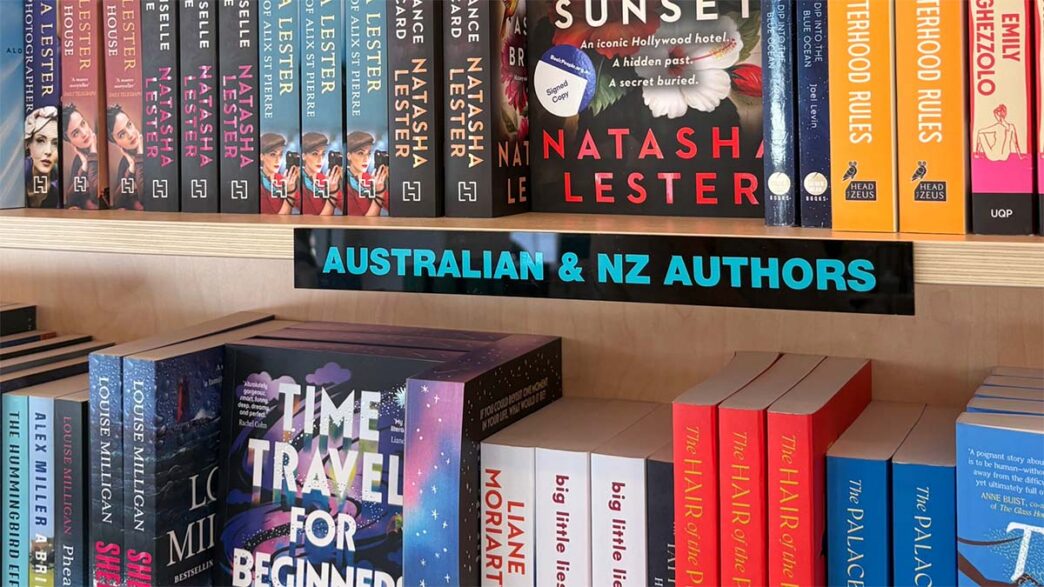
Artificial intelligence is rapidly becoming embedded in creative industries; it is everywhere you look and is no longer restricted to chatrooms or search bars. As AI tools are evolving, it can be hard to spot and see where it has been used.
The book industry is left with a difficult question: how can this be used to assist creativity rather than take over?
The Australian Publishing Association states on their website that Australian authors and creators should be “supported, not displaced” by AI.
With established and debut authors being found to have used AI to write their novels, how can existing and aspiring authors expect to get their authentic stories out there in amongst all this mechanical writing threatening to dominate bookshops?
For Erica Lee, an Australian author set to debut with her upcoming memoir The Bond Between Us, AI is a tool to improve fluency and grammar rather than create content itself.
“AI should never replace the heart of the story,” she said.
Lee emphasises that AI could never dilute her voice as her memoir, centred around her experience raising her two neurodivergent children, carries too much vulnerability and emotions to be taken away.
“The best part about a memoir is that the story is your own, you can tell when something has been lived and felt.”
Can AI replicate an Australian voice?
Author and creative writing lecturer at ECU, Dr Aksel Dadswell, feels passionately about this.
“I believe that generative AI is absolutely antithetical to creative writing, and creative practice of any kind.
“AI itself is based on available, already-existing information to generate responses. As it has swiftly evolved, these systems are now able to mimic Australian slang and linguistic conventions in attempt to convey the authentic Australian voice.”
Despite this, as Lee highlighted, it can be argued whether this technology can reproduce the creative thinking and lived experiences that powers literature.
“There are just too many cultural, historical, and personal qualities that are deep-rooted in Australian books to be replicated by a machine. These experiences and upbringings are too personal to be altered by an algorithm.”
Australian literature has been long praised for reflecting the country’s unique identity through linguistic nuances exploring the vast landscapes and array of communities.
“Australian writers have so much rich history and landscape and culture to draw from and that provides a unique flavour to the fiction we write,” said Dr Dadswell.
This leaves many readers reaching for these books as they offer outstanding insights into Australian life and culture.
What happens when readers stop trusting the writer?
As well as authors questioning the influence AI has on shaping stories, readers are also beginning to hesitate when choosing a book for fear of inauthenticity.
Dr Askell Dadswell questions whether anyone should bother to consume AI-generated material, especially in an art form that is so creative.
“The creative process and critical thinking is so integral to any form of art and AI removes that.”
A survey conducted by the University of Melbourne found that 78 per cent of Australians are concerned regarding the negative outcomes of AI usage, with loss of human interaction and misinformation being two contributing factors.
As the publishing industry continue to navigate this everchanging technological landscape, the challenge will be ensuring that artificial intelligence supports and nurtures Australia’s powerful voice rather than snuffing it out.
When positively utilised, AI has the potential to contribute to the proofreading element of storytelling by assisting with grammatical and organisational processes.
The question lies not in the abolishment of AI altogether, but rather AI dominating creative authorship and the intent behind it.
Dr Dadswell said it is crucial to consider “the people telling us AI is the future”.
“We have to ask why do they want us consuming slop and removing our ability to develop our creative thinking?”
Dr Dadswell said an authentic Australian voice was central to the relationship between writers and readers, warning that artificial intelligence could weaken that connection and blur the line between authentic writing and misinformation.
“People talk a lot about the inevitability of AI and how we have to jump on board or get left behind. Please, please leave me behind!”
As the world changes and evolves, it is clear to say that AI is here to stay and the influences it has on the publishing industry will be almost impossible to ignore, no matter what side of the page you are on.
Jai Doherty

I am a Dual Degree Global Communications and Media student from the University of Portsmouth. I'm studying here at ECU for a year to help further my studies.