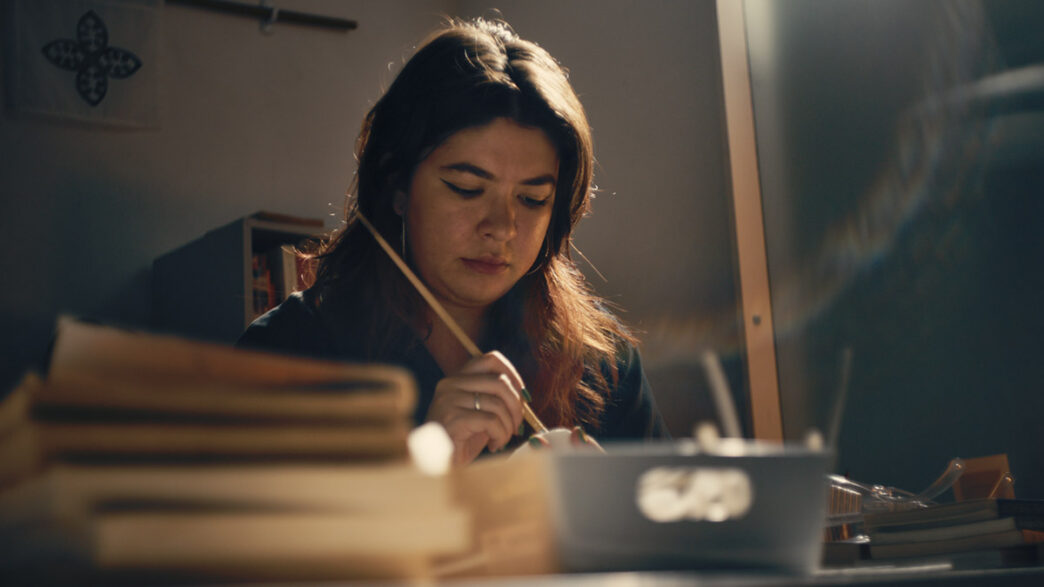
Artist Jenna Lee is bringing her first solo exhibition in Western Australia to ECU Gallery, using paper, dictionaries and colonial texts to explore Larrakia language and identity.
A Gulumerridjin, Wardaman and KarraJarri woman, with Japanese, Chinese, Filipino, Irish and Scottish ancestry, Lee’s Written in Stone & Seed & Star challenges the way Aboriginal languages have historically been recorded and represented.
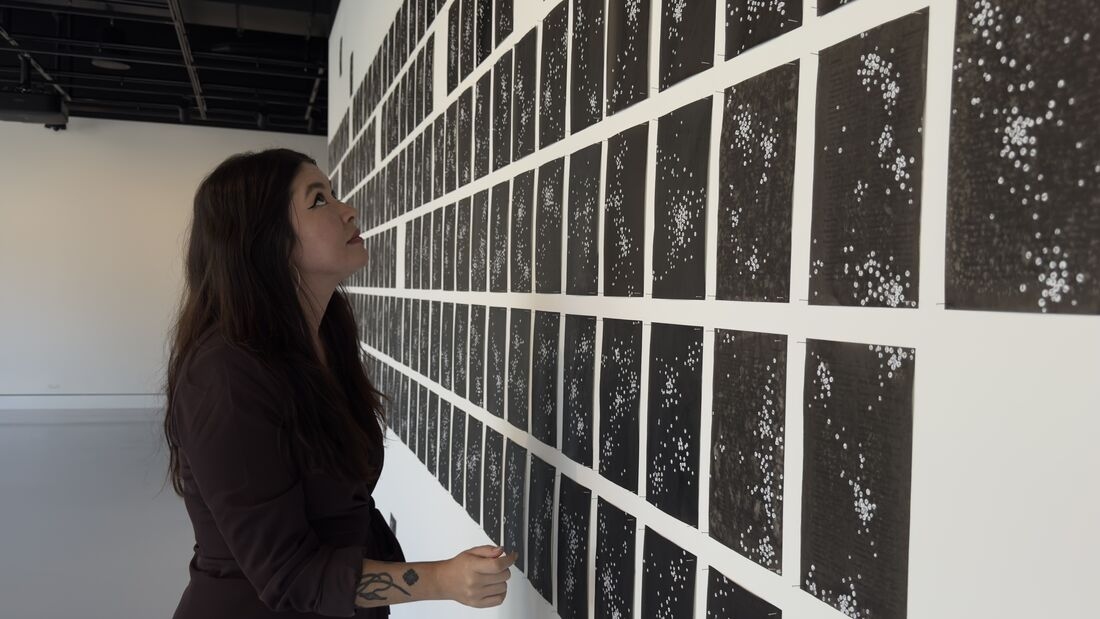
Lee deconstructs colonial texts and repurposes the paper into sculptures, challenging the way Aboriginal languages and cultures have historically been recorded.
“I work with a book called Aboriginal Words and Place Names, which is a dictionary of Aboriginal words that doesn’t say where our words come from.”
Lee said publications that group words from different Aboriginal languages together can obscure the diversity and origins of those languages.
“We had over 250 languages and over 850 dialects. To suggest that it’s all kind of one language is incorrect,” she said.
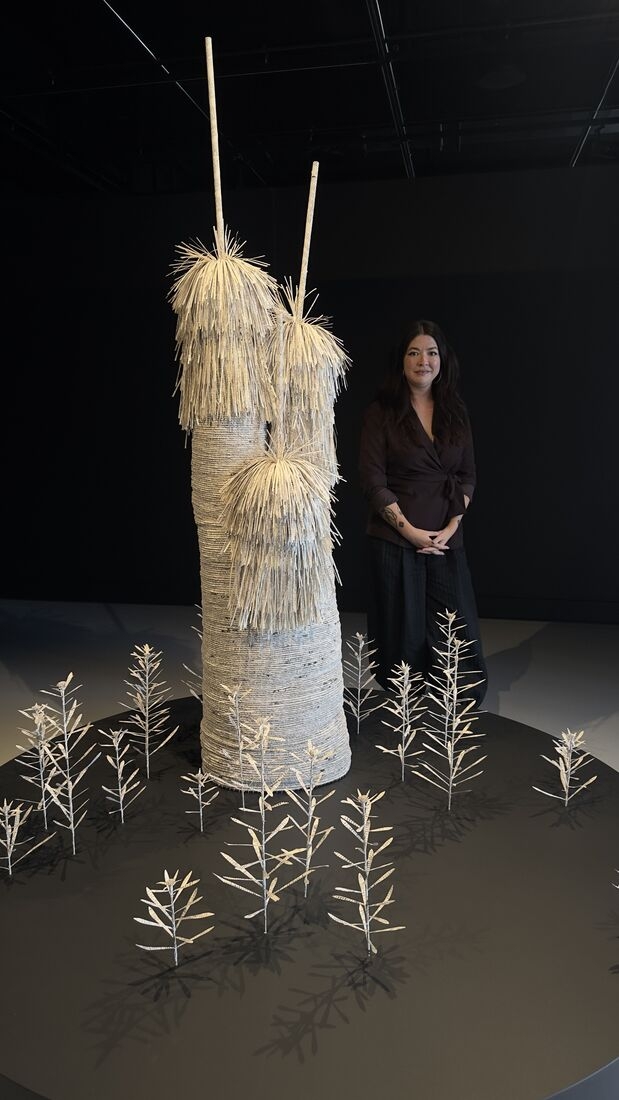
For Lee, treating “Aboriginal” as a single language ignores that linguistic diversity.
“It becomes quite a useless book if you were attempting to learn ‘Aboriginal’ you can’t – that’s not a thing,” she said.
Lee’s practice was also shaped by her family’s mixed cultural heritage and her Larrakia upbringing.
“One of the things that I am very fortunate being Larrakia, is one of the first groups in Australia to get native title.”
“A lot of our like cultural upbringing through my dad was strong and immediate and always present,” she said.
Lee reflected on how her family home was one that fostered memory of culture within it.
“The kind of house we grew up in really reflected our mixed cultures.”
Reclaiming language through paper
Lee’s relationship with paper began at home, where her mother encouraged creativity through paper craft.
“My mum really fostered creativity within us and one of the things that she did was paper craft.”
She said paper eventually became a material through which she could honour the different parts of her heritage.
“It was a really perfect material to use to honour all heritages, I think was more authentic to me.”
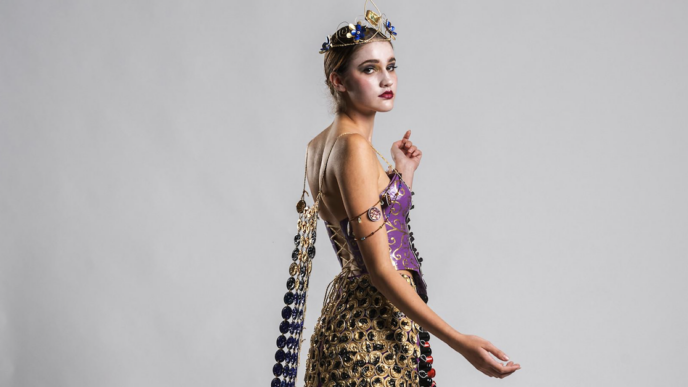
Lee also uses graphic design and photography in her work and plays on colonial visualisations of wealth.
‘The resilience of language and culture’
ECU Senior Curator Dr Alix Beattie said her role was to present artists’ work in ways that helped audiences connect with their ideas.
“My role is to bring the artists’ vision to life and shaping a narrative that audiences can connect to.
“I love artists who make art with passion and want to engage people,” she said.
Dr Beattie added, Jenna Lee’s works are more than just art. She believes her work is a way of preserving culture and sharing stories.
“These stories and histories are important for people to experience and this is why Jenna was invited to exhibit at ECU Gallery as her works show the resilience of language and culture.”
Ra Castel

I am a journalist student at ECU, YouTuber and Content producer with over 249K views on TikTok, 25K+ views on Instagram reels and posts and 4k views on YouTube. My intent for my works to progress into more video journalism that will cover all sorts of topics from entertainment and breaking news. Other journalist mediums I am interested in diving into are podcasting, radio and content creation. You can find me on all social media platforms and Linkedin for more content.